Your development team should not be designing your tokenomics. Here is why multi-token economies fail for most projects, when dual tokenomics actually work, and how to structure token purchases the right way.

Ashish Homkar
Founder & CEO · March 17, 2026 · 6 min read
A founder building a Web2-to-Web3 migration project sits down with their development team to discuss token architecture. The developers, eager to demonstrate technical depth, propose three tokens: a staking token, a governance token, and a utility token. The founder, trusting the people they are paying, says yes.
This is one of the most expensive mistakes a token project can make. At Blockphrase, we have seen this pattern cause serious damage: inflated development bills, fragmented liquidity, confused retail investors, and ultimately, failed projects.
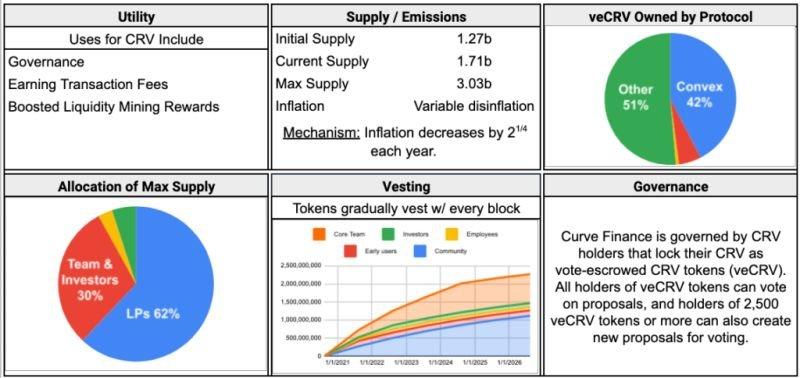
Dual tokenomics can work. Curve Finance, Axie Infinity, and MakerDAO are legitimate examples of projects that have sustained multi-token models over time -- but they share something in common: massive, mature ecosystems with hundreds of use cases and deep liquidity.
It fragments liquidity
Every additional token you introduce splits liquidity across the ecosystem. Buyers have to decide which token to hold, market makers have to maintain depth across multiple pairs, and emissions must be carefully calibrated to prevent one token from cannibalising the others.
It inflates development and infrastructure costs
Three tokens means multiple smart contracts, multiple audit requirements, multiple deployment costs, and a more complex backend infrastructure. Your AWS bill grows. Your audit bill grows. Your surface area for security vulnerabilities grows.
It confuses retail investors
Retail investors drive adoption. A three-token model where each token has a separate purpose and separate price action is not intuitive. If they cannot understand it quickly, they will not invest in it.
Token utility sustains demand -- remove it and tokens collapse
If your staking token or governance token does not have genuine, sustained demand drivers, it will lose value. And when one token in a multi-token ecosystem collapses, it creates a domino effect on the others.
A tri-token economy never makes sense unless your project has hundreds of distinct, active incentives and utilities. For early-stage projects, that ceiling does not exist.
| When dual tokenomics work | When multi-token models fail |
|---|---|
| Mature P2E or gaming ecosystems (Axie Infinity), DeFi protocols with deep liquidity and governance separation (MakerDAO, Curve Finance), projects with genuinely distinct utility and governance demands at scale. | Early-stage Web2-to-Web3 migrations, projects without hundreds of active use cases, teams advised by developers rather than tokenomics specialists, projects where liquidity depth cannot support multiple pairs. |
Off-chain token purchases remove transparency, bypass on-chain audit trails, and introduce counterparty risk. For any business token allocation, on-chain execution with structured mechanics is the correct approach.
Development teams are outstanding at building secure, efficient smart contract systems. That is their domain. They are not tokenomics advisors, market-making strategists, or go-to-market architects.
A tokenomics advisor designs the token architecture. The development team's role is to implement it securely and as efficiently as possible -- not to design 20 smart contracts like poker chips because more complexity feels like more value.
Does a crypto project ever need three tokens?
Almost never. A tri-token economy only makes sense for mature ecosystems with hundreds of active incentives, deep liquidity, and a large established user base. For early-stage projects, it inflates costs, fragments liquidity, and confuses investors.
When do dual tokenomics make sense for a Web3 project?
Dual tokenomics are justified when there is a genuine structural separation of utility and governance demand, such as in established P2E games or large DeFi protocols. For most projects, a single well-designed token with clear utility is the stronger choice.
Why is off-chain token purchasing a bad idea?
Off-chain token purchases lack on-chain audit trails, introduce counterparty risk, and are a red flag for institutional investors and legal review. Business token allocations should be executed on-chain with structured purchase schedules and performance-linked vesting.
Should my development team design my tokenomics?
No. Developers will default to technically convenient designs rather than economically optimal ones. The correct model is a dedicated tokenomics advisor defining the architecture, with the development team responsible for secure and efficient implementation.
What causes token value to collapse in a multi-token ecosystem?
Lack of sustained utility demand. If any token in a multi-token system loses its use case or fails to attract genuine holders, its value falls, and the sell pressure and loss of confidence can cascade to the other tokens.